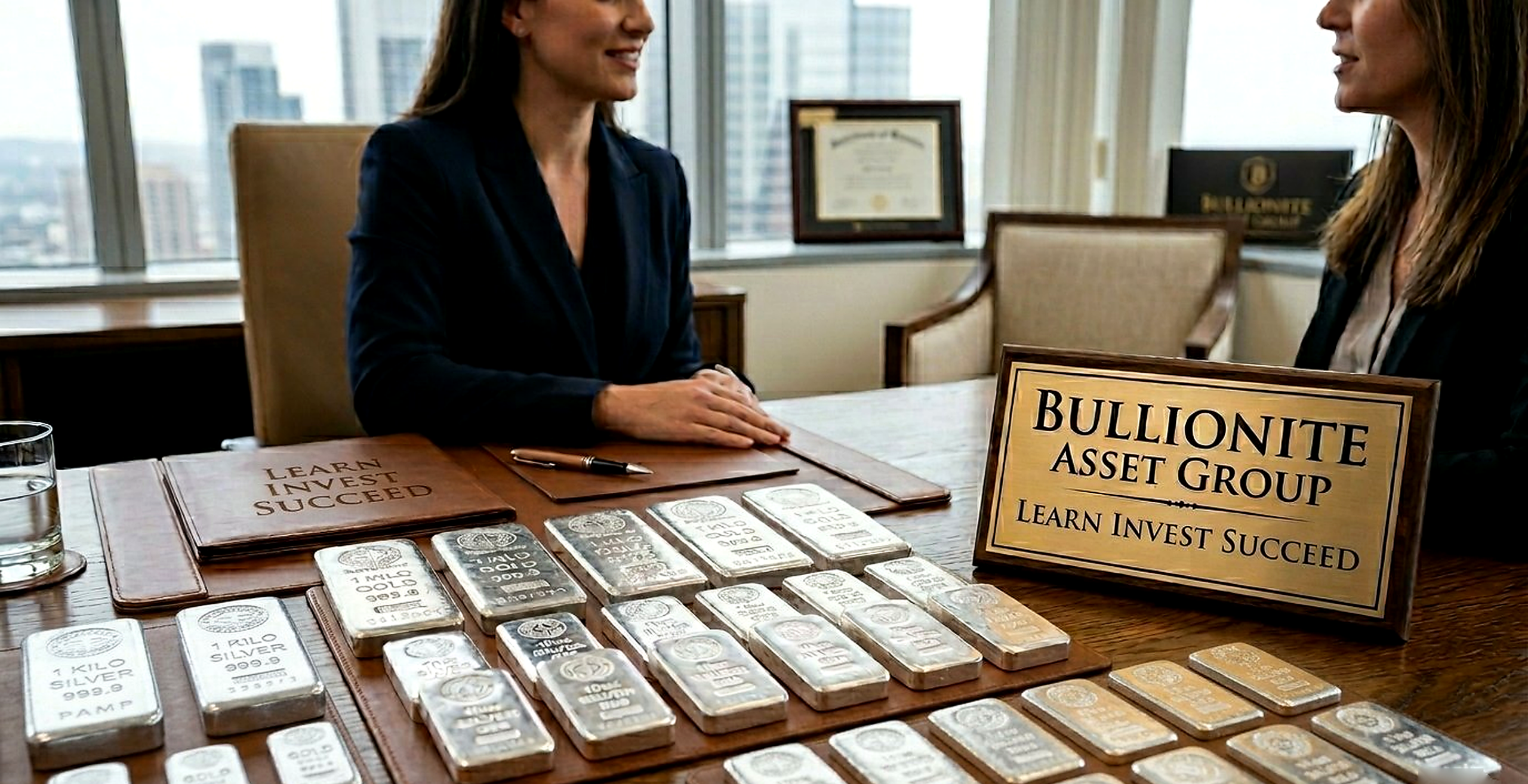
Converting IRA to Silver: Step-by-Step Rollover Process (2026)
What Is Converting an IRA to Silver?
Converting IRA to silver means moving money from an existing retirement account (a Traditional IRA, Roth IRA, SEP IRA, SIMPLE IRA, or employer 401(k)) into a self-directed silver IRA that holds physical, IRS-approved silver bullion instead of stocks, bonds, or mutual funds. The IRS calls this a rollover or transfer, and if you structure it correctly under IRS Publication 590-A, it is not a taxable event. No surprise 1099-R, no penalty.
The legal mechanism is a narrow carve-out to the silver IRA collectibles rule under IRC 408(m)(3), which normally forbids IRAs from holding collectibles but permits certain bullion coins and bars that meet a minimum fineness of .999 (99.9% pure silver). That single exception to the silver IRA collectibles rule is what makes a silver backed IRA legal at all.
Can I Convert My IRA to Silver Without Paying Taxes?
Yes, if you use a direct (trustee-to-trustee) rollover. The cash never touches your hands, so the IRS treats it as a continuation of the same retirement account. No 1099-R, no withholding, no 10% penalty, no taxable event. A direct rollover to a silver IRA is the only path I would recommend to a client.
A silver IRA rollover turns into a taxable event only when you:
- Take an indirect rollover to a silver IRA and miss the 60-day redeposit window.
- Blow past the one-indirect-rollover-per-12-months limit.
- Convert a Traditional IRA into a Roth silver IRA. That is a Roth conversion, so you owe ordinary income tax on the converted balance. You still dodge the 10% penalty, though.
“Investor concerns over stagflation, the Federal Reserve’s independence, government debt sustainability, the US dollar’s role as a safe haven, and geopolitical risks” are fuelling record inflows into silver, according to Philip Newman, Managing Director at Metals Focus, in the Silver Institute’s 2025 World Silver Survey. I quote that one a lot because it lines up with what clients actually tell me when they walk in asking about a silver IRA inflation hedge.
How Do I Convert My IRA to Silver in 5 Steps?
Here is the short version of how to convert IRA to silver without tripping a taxable event.
Step 1. Open a Silver IRA Account With a Self-Directed Custodian
To open a silver IRA, pick a self-directed IRA custodian that is legally qualified to hold precious metals. These are specialised trust companies, not your Fidelity or Schwab brokerage. Common silver IRA companies on the custodian side include Equity Trust, STRATA Trust, and Kingdom Trust. Before you sign anything, run the firm through FINRA BrokerCheck and the SEC’s Investor.gov. BullioniteAssetGroup pre-vets every custodian we work with for regulatory standing and fee transparency, which saves new clients a weekend of due diligence.
Step 2. Initiate the Rollover or Transfer
Submit a transfer request if you are moving from an existing IRA, or a direct rollover request if you are moving from a 401(k). Your new custodian handles the paperwork. Funds usually arrive in 7 to 14 business days. Always pick a direct trustee-to-trustee transfer over an indirect rollover to a silver IRA. The 60-day clock is not worth the stress.
Step 3. Fund the Silver IRA and Buy Silver for the IRA
Once you fund the silver IRA and the cash sits in your silver IRA account, place a buy order through your metals dealer to buy silver for your IRA. The dealer invoices your custodian, the custodian wires payment, and the metal ships straight to the depository. You never touch the silver yourself. Touching it counts as a distribution, and the IRS will treat it that way.
Step 4. Store Your Silver in an IRS-Approved Depository
Your bullion goes into a non-bank trustee depository approved under IRC 408(n). The biggest names are Delaware Depository, Brinks, IDS (International Depository Services), and A-Mark/CNT. You pick segregated storage (your bars sit in a bin marked with your name) or commingled storage (cheaper, pooled). Segregated costs more. I think it is worth it for most clients.
Step 5. Monitor, Rebalance, and Take Distributions
Log in to your custodian portal to track holdings, rebalance inside the silver IRA account, or take distributions later. At age 73 under SECURE Act 2.0, Traditional silver IRAs require RMDs. You can take the silver IRA RMD in kind (the depository ships you the physical silver) or in cash (the custodian sells bullion and wires you the proceeds). Most clients take cash. Some want the coins in hand. Both are legal.
Which Silver Coins and Bars Are IRA-Approved?
Per IRC 408(m)(3), silver IRA eligible coins and bars must meet a minimum .999 fineness and come from an approved mint or LBMA-accredited refiner. Here is the approved list of silver IRA approved bullion:
- American Silver Eagle (the only coin permitted at .9993 fineness by statute)
- Canadian Silver Maple Leaf (.9999)
- Austrian Silver Philharmonic (.999)
- Australian Silver Kangaroo / Kookaburra (.9999)
- Britannia Silver (.999)
- Silver bars and rounds from COMEX/NYMEX, LBMA, LPPM, or ISO 9000 accredited refiners (1 oz, 5 oz, 10 oz, 100 oz, 1,000 oz)
Not allowed: pre-1965 US 90% silver coins, numismatic or rare coins, Silver Krugerrands (mixed alloy), commemoratives, and any coin graded as a collectible. If a dealer tries to sell you a “special IRA-exclusive” proof coin at a huge markup, that is exactly the silver IRA scam pattern Reddit users complain about, and it is a reason to walk away.
How Much Does It Cost to Convert an IRA to Silver?
Cost is the number one question people ask on Reddit and LinkedIn, and the number one reason silver IRAs get a bad reputation. Here is the real 2026 silver IRA setup cost structure, not marketing spin. If you are hunting for the best silver IRA custodian, price transparency matters more than the flashy sign-up bonus.
| Fee Type | Typical Range | When Charged |
| Account setup | $50 to $150 | One-time |
| Annual administration | $80 to $300 | Yearly |
| Storage (commingled) | 0.50% to 0.75% of assets | Yearly |
| Storage (segregated) | 0.75% to 1.00% of assets | Yearly |
| Dealer spread over spot | 5% to 10% (bars) / 8% to 18% (coins) | Per purchase |
| Wire / transfer | $25 to $50 | Per event |
Watch out for “proprietary” or “exclusive” coins priced 20% to 40% above spot. That is the hidden premium Reddit users complain about most often, and it is the easiest way to lose 25% of your principal before the metal even reaches the depository. Always demand the spot-plus markup in writing before you wire anything. If a salesperson will not give you a number in writing, they are the silver IRA broker you should avoid.
Where Is My Silver IRA Stored, and Can I Store It at Home?
No. Home storage of IRA silver is not legal. The IRS and the US Tax Court (McNulty v. Commissioner, 2021) have made it clear that physical possession by the account holder is a deemed distribution, which triggers full tax and a 10% penalty if you are under 59 1/2. The CFTC precious metals fraud alert spells out the same warning. “Home storage IRA” is a marketing phrase with no legal basis behind it.
All IRA silver must be held by a non-bank trustee in a depository that meets the IRC 408(n) requirements. Your options for an IRS approved silver depository include:
- Delaware Depository (Wilmington, DE). Class 3 vaults, $1B Lloyd’s insurance.
- Brinks Global Services (Los Angeles, New York, Salt Lake City).
- International Depository Services (IDS) (Delaware, Texas).
- Texas Bullion Depository (Leander, TX). State-operated.
- CNT Depository (Bridgewater, MA).
Silver IRA vs Gold IRA: Which Is Better for Retirement?
| Feature | Silver IRA | Gold IRA |
| Entry price | ~$30/oz (2026) | ~$2,700/oz (2026) |
| Volatility (annualised) | ~28% | ~15% |
| Industrial demand share | 55% (solar, EVs, electronics) | 8% |
| Storage cost per dollar | Higher (bulkier) | Lower |
| Liquidity | High | Very high |
| Gold/silver ratio | 75:1 to 90:1 historically | Benchmark |
Silver has a dual role as both a monetary metal and an industrial input. The World Gold Council and the Silver Institute both report that silver has more upside leverage in a bull market and more downside in a recession. Most SDIRA planners I know recommend a blended precious metals IRA at roughly 60/40 gold to silver. I usually steer newer clients closer to 70/30 gold heavy until they have lived through a silver drawdown.
What Are the IRS Rules for a Silver IRA?
These are the silver IRA rollover rules and compliance basics every account holder has to follow.
- Fineness minimum: .999 (American Silver Eagles are the only statutory exception).
- Approved mint or refiner: COMEX, NYMEX, LBMA, LPPM, NYSE Liffe, TOCOM, ISO 9000.
- Qualified custodian: A non-bank trustee approved under IRC 408(n).
- Qualified storage: IRS-approved depository. No home storage. No safe deposit box.
- Contribution limits (2026): $7,500 under age 50, $8,600 for age 50 and up. Same as any IRA.
- RMD age: 73 for Traditional, SEP, and SIMPLE silver IRAs. Roth has no RMDs during the owner’s lifetime.
- Reporting: Your custodian files Form 5498 annually and Form 1099-R on any distributions.
The full source of truth is IRS Publication 590-A and Publication 590-B. Bookmark both.
What Are the Risks of Converting an IRA to Silver?
- Price volatility and silver IRA early withdrawal pressure. Silver routinely moves twice the daily range of gold. If you cannot stomach a 20% drawdown, size your position accordingly, otherwise a silver IRA early withdrawal under 59 1/2 costs you income tax plus a 10% penalty.
- No yield. Silver generates no dividend, coupon, or interest. It only wins when the spot price rises.
- Concentration risk. Most advisors cap total precious metals exposure at 5% to 20% of the retirement portfolio.
- Dealer mark-up risk. Non-transparent dealers can bury 15% to 25% in “premium” pricing.
- Liquidity discount at sale. Expect to sell at or slightly below spot, which narrows your effective return.
Legendary precious-metals investor Rick Rule, founder of Sprott US Holdings, recently told subscribers “You have no excuse, no excuse whatsoever if you work and think, not to make a million or two in this market in the next five years.” I take that with a grain of salt, but his point stands: silver’s upside is real when you size it right and hold through the chop.
Peter Schiff, CEO of Euro Pacific Capital, has argued on Kitco News that “gold isn’t changing, it’s the value of the dollar that’s decreasing.” The same thesis applies to silver held inside a tax-advantaged retirement account. If the dollar keeps losing ground, the nominal silver price has room to run.
Silver IRA Rollover Mistakes to Avoid
- Taking an indirect rollover to a silver IRA and missing the 60-day window.
- Buying “IRA-exclusive” proprietary coins with 20%+ premiums.
- Treating “home storage silver IRA” marketing as a real legal structure. It is not.
- Forgetting the silver IRA RMD at age 73 and eating the 25% excise tax.
- Signing up with an unvetted custodian. Run the name through BrokerCheck and Investor.gov first.
- Rolling over a Roth IRA to silver without reading the five-year rule.
- Putting 100% of your retirement into metals. Discipline matters. 5% to 20% is the range.
Key Takeaways
- Converting IRA to silver is a legal, tax-free process via a direct self-directed silver IRA rollover.
- Silver must meet .999 fineness and sit in an IRS-approved depository. Home storage is illegal and the US Tax Court has already ruled on it.
- Budget $50 to $150 for setup, $80 to $300 in annual admin, and 0.5% to 1% for storage on top of dealer spreads.
- A direct trustee-to-trustee transfer is the only safe method. It avoids the 60-day window and the one-rollover-per-year rule.
- Keep total precious metals exposure at 5% to 20% of your retirement portfolio, weighted between silver and gold based on your risk tolerance.
- Vet every custodian and dealer with FINRA BrokerCheck, SEC Investor.gov, and the CFTC fraud advisory before funding anything.
- Demand spot-plus-markup pricing in writing. It is the single best defense against the number one complaint on Reddit: hidden premiums.
Disclosure: This article is for educational purposes only and does not constitute tax, legal, or investment advice. BullioniteAssetGroup is a self-directed IRA consulting firm. Readers should consult a qualified CPA, tax attorney, or financial advisor before making retirement investment decisions. Non-compliance with IRS rules can result in full IRA disqualification and significant penalties.
Published: April 2026 | Next Review: August 2026
FAQ's
What is the minimum investment to open a silver IRA?
Most reputable custodians set a floor of $5,000 to $10,000. Some dealers advertise a $25,000 minimum, but that is a dealer policy, not an IRS rule. There is no legal minimum investment for a silver IRA account.
Can I store my silver IRA at home?
No. The US Tax Court confirmed in McNulty v. Commissioner (T.C. Memo 2021-1) that home storage of IRA bullion is a taxable distribution. “Home storage IRA” is a marketing phrase, not a legal structure. Do not do it.
What happens if my custodian or depository goes bankrupt?
Your silver is segregated trust property. Creditors of the custodian cannot touch it. Reputable depositories also carry Lloyd’s of London insurance, usually $1B or more at places like Delaware Depository.
How do I know my silver is actually in the vault?
IRS-approved depositories publish annual audited statements (by Inspectorate International or Bureau Veritas). Request your audit report from the custodian once a year. If they cannot produce one, find a new custodian.
What are the hidden fees I should watch for?
There are five places dealers hide money:
- Dealer spread above spot (the biggest one).
- “Proprietary coin” premiums.
- Storage fee creep (percent-of-assets vs flat).
- Wire and paperwork fees.
- Liquidation “buyback spread” when you sell.
Demand an all-in silver IRA fee schedule before signing anything.
What if I miss the 60-day rollover deadline?
You owe ordinary income tax on the full balance and, if you are under 59 1/2, a 10% early withdrawal penalty on top of that. This is exactly why a direct trustee-to-trustee transfer is the only safe path. The 60-day clock exists to trap the careless.
How do I sell silver from my IRA at retirement?
You have two options. A cash distribution means the custodian sells the bullion at market and wires you the proceeds. An in-kind distribution means the depository ships the physical silver to you and you report the market value as taxable income. Either one counts as a silver IRA distribution for tax purposes.
Have Questions About Your Self-Directed IRA?
Schedule a free 30-minute consultation with Bullionite Asset Group. No pitch, no pressure, no referral commissions.

As the Founder and Chief Investment Officer of Bullionite and Bullionite Asset Group, I’ve built my career on a simple premise understanding the intersection of macroeconomics, commodities, and digital assets to stay ahead of the curve, not under it. My focus is on navigating the complexities of the world’s largest markets spanning the US, the Middle East, and Asia to identify high-value opportunities for alternative investment.
With a specialized focus on Self-Directed IRAs (SDIRAs), I help investors move beyond traditional 401ks by integrating assets like precious metals and cryptocurrency into their retirement strategies. Based in Newport Beach, California, I am dedicated to bridging the gap between traditional finance and the evolving landscape of new age digital assets, ensuring that every strategic move is backed by deep market insight and a commitment to long-term growth.