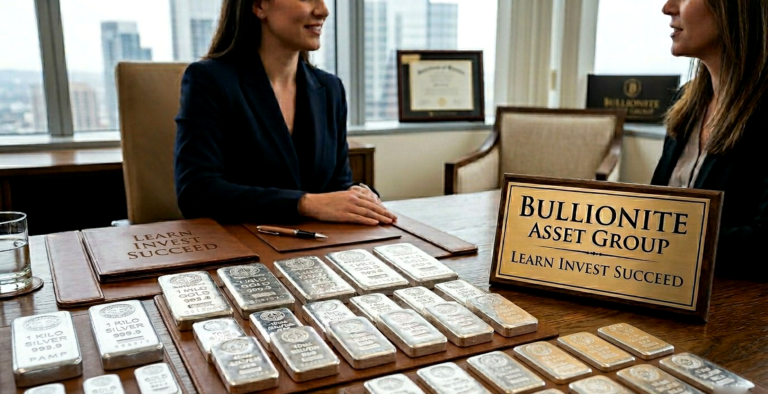
Are Gold IRAs a Good Idea | What Investors Need to Know Before They Commit
TL;DR
Are gold IRAs a good idea? For the right investor, yes. A gold IRA is a self-directed IRA that holds physical gold and other IRS-approved precious metals inside a tax-advantaged retirement account. Gold hit $3,600 per ounce in 2025, outperforming the S&P 500 that year, and in 2024 both posted over 25% gains, a historically rare event. The tax benefits are real. The fees are higher than a standard IRA. Home storage is not permitted by the IRS. And gold pays no dividends or interest, so it only rewards you if the price moves in your favor. This guide covers the full picture, including who gold IRAs work for and who should probably skip them.
Are gold IRAs a good idea is one of the most common questions retirement investors are asking right now. With gold hitting record prices, inflation that has not fully settled, and stock market volatility doing what it always does, more people are looking at their 401(k)s and IRAs and wondering if physical gold deserves a seat at the table.
The answer is not simple, and anyone who tells you it is is either selling something or oversimplifying. Gold IRAs have genuine advantages. They also have genuine costs and restrictions that get glossed over in a lot of marketing material. This article covers both sides without the sales pitch.
What Is a Gold IRA and How Does a Gold IRA Work
A gold IRA, also called a precious metals IRA or gold-backed IRA, is a self-directed individual retirement account that lets you hold physical gold, silver, platinum, and palladium instead of, or alongside, traditional paper assets like stocks and mutual funds.
The account works under the same IRS rules as a traditional or Roth IRA. Same contribution limits. Same tax treatment. Same withdrawal rules. The difference is that the assets held inside are physical metals, not securities traded on an exchange. Because of this, a gold IRA requires a specialized self-directed IRA custodian rather than a standard brokerage.
Per IRS Publication 590-B, gold and other precious metals can be held in an IRA provided they meet specific purity standards and are stored at an IRS-approved depository. The account holder never takes direct possession of the metals while they remain inside the IRA.
Traditional Gold IRA vs. Roth Gold IRA
The choice between a traditional gold IRA and a Roth gold IRA follows the same logic as any traditional vs. Roth decision:
| Account Type | How It Works |
| Traditional gold IRA | Funded with pre-tax dollars. Contributions may be tax-deductible. Gold grows tax-deferred. Taxes are owed on withdrawals in retirement. Required minimum distributions (RMDs) begin at age 73. |
| Roth gold IRA | Funded with after-tax dollars. Gold grows completely tax-free. Qualified withdrawals in retirement are tax-free. No RMDs during the owner’s lifetime. Income limits apply for direct contributions in 2026 ($153,000 single / $236,000 married). |
| SEP gold IRA | Designed for self-employed individuals and small business owners. Higher contribution limits (up to $70,000 in 2025). Same physical gold rules apply. |
For 2026, standard gold IRA contribution limits are $7,500 for individuals under age 50 and $8,600 for those 50 and older, per IRS Publication 590-A. Rollovers from a 401(k) or existing IRA do not count against these limits and allow for a much larger initial position.
Are Gold IRAs a Good Idea? The Direct Answer
Are gold IRAs a good idea for most investors? Partially. They work well as a piece of a diversified retirement strategy, not as a replacement for one. Financial advisors typically suggest a 5% to 20% allocation to precious metals in a retirement portfolio, not a 100% concentration.
Here is what the data actually shows. Gold returned about 543% from 2004 to 2024, roughly 9.8% annualized. The S&P 500 returned 482% in the same stretch, about 9.2% annualized, according to a Metals Edge 20-year comparison. That is one of the rare periods where gold edged out stocks. Over 54 years of data, the S&P 500’s CAGR was 11.52% vs. gold’s 8.19%.
But that longer-term comparison misses gold’s real value. During the nine years when the S&P 500 posted negative returns, gold outperformed in eight of them, averaging 19.4% returns while the index averaged negative 15.3%. In 2008, gold gained roughly 25% while the S&P 500 fell over 37%. That is the case for gold in a retirement account: not maximum growth, but genuine protection when markets break down.
Are gold and silver IRAs a good idea if you’re already well-diversified in stocks and bonds? Yes, a modest allocation makes sense as an inflation hedge and tail-risk buffer. Are gold IRAs a good idea as a solo retirement vehicle? No. Gold generates no income. It cannot compound the way a dividend-paying stock can. And the fees that come with an SDIRA eat into returns year after year.
Bottom line: Gold IRAs make sense as a hedge and diversifier, not a foundation. A 5% to 15% allocation is the sweet spot for most investors nearing or in retirement.
Gold IRA Pros: What Actually Makes Them Worth Considering
Inflation Hedge With a Demonstrated Track Record
Gold’s 2,000-year history as a store of value is not marketing language. In 1971, when the U.S. abandoned the gold standard, an ounce of gold cost $35. By May 2026, that same ounce was trading above $3,600. That is purchasing power preservation that no fiat currency has matched. In periods of rising inflation specifically, gold has historically outperformed both stocks and bonds, which makes it a natural fit for the retirement-account structure where you are locking money up for decades.
Tax Advantages That Are Actually Meaningful
Physical gold held outside a retirement account is taxed as a collectible under the IRS rules, with a maximum capital gains rate of 28%, higher than the 20% maximum rate that applies to most long-term stock gains. Putting gold inside a traditional SDIRA defers all those gains until withdrawal. Putting it inside a Roth SDIRA eliminates taxes on growth entirely. For investors sitting on significant gains in gold positions, this tax structure matters.
Portfolio Diversification That Works When You Need It
Gold does not move in lockstep with stock markets. In 2025, as the S&P 500 was down roughly 3.5% year-to-date early in the year, gold was up over 14%. In downturns, rising inflation environments, and periods of geopolitical tension, gold tends to move independently or inversely to equities. That is the definition of a useful diversifier in a retirement portfolio.
Rollover Access Without Annual Contribution Limits
You can fund a gold IRA through a direct rollover from a 401(k), 403(b), or existing IRA without triggering taxes or penalties and without counting against the annual $7,500 contribution cap. This lets investors move significant sums into precious metals in a single transfer, something that would take years through annual contributions alone.
No Counterparty Risk on Physical Assets
Stocks, bonds, ETFs, and money market funds all carry some form of counterparty risk: another party can default, go insolvent, or freeze access to your assets. Physical gold inside an IRA does not. Once the metals are in an IRS-approved depository, their value depends only on the global gold market, not on the financial health of any issuing company or government.
Gold IRA Cons: The Costs and Restrictions Nobody Likes to Talk About
Higher Fees Than a Standard IRA
This is the single most important thing to understand before opening a gold IRA. A standard IRA at a brokerage often has zero annual fees. A gold IRA has several layers of costs that do not go away regardless of gold’s performance:
| Fee Type | Typical Range | One-Time or Annual | Notes |
| Account setup | $50 – $300 | One-time | Most custodians charge $50; some wave it on large rollovers |
| Annual custodian fee | $75 – $300/year | Annual | Flat-fee structures better for larger accounts |
| Storage fee | $100 – $300/year | Annual | Segregated storage costs more than commingled |
| Transaction fees | $25 – $50 per trade | Per trade | Charged each time metals are bought or sold |
| Wire transfer fees | $15 – $40 per wire | Per event | Applies to incoming and outgoing wires |
| Dealer markup | 2% – 5% over spot | At purchase | Proof or collectible coins can be 20%+ over spot |
| Account termination | Up to $250 | One-time | Charged when closing or fully transferring out |
A rough estimate for an investor with $50,000 in a gold IRA: annual total costs of $300 to $600 before any dealer markup. That is 0.6% to 1.2% of assets in fees every year, just to hold the account. Gold needs to return more than that before you break even against fees, something a brokerage IRA holding index funds does not require.
Gold Pays No Dividends or Interest
This is a real limitation. Every dollar in your gold IRA is working for you only if the price of gold goes up. Stocks pay dividends. Bonds pay interest. Real estate in an SDIRA pays rent. Gold sits in a vault and waits. If gold prices stay flat for five years, your real return after fees is negative. For investors who rely on their retirement accounts to generate income before or during retirement, this matters a lot.
IRS Storage Rules Are Strict, and Home Storage Is Not Allowed
IRS rules under IRC Section 408(m) require that all gold held in a gold IRA be stored at an IRS-approved depository, not at your home, not in a bank safe-deposit box you control, and not in any facility you personally oversee. Home storage gold IRA arrangements are marketed online but are not IRS-approved. The IRS has explicitly challenged these structures, and courts have sided with the IRS. If you take personal possession of gold inside your IRA, it is treated as a taxable distribution for the full value of the metals, potentially plus a 10% early withdrawal penalty if you are under 59½.
Required Minimum Distributions Create Liquidity Challenges
Traditional gold IRAs are subject to RMDs starting at age 73. You cannot pay an RMD with a lump of gold. You either need to sell metals to generate cash, which requires dealer coordination and can be slowed by market conditions, or you need to maintain a liquid portion of your retirement savings in a separate account to cover RMDs while leaving the gold IRA untouched. This requires planning that most investors overlook when opening the account.
Minimum Investment Requirements
Many gold IRA companies require a minimum investment of $10,000 to $50,000 to open an account. Augusta Precious Metals, for example, requires $50,000. This is not a universal rule, but it is common enough that investors with smaller balances may not qualify for some of the better-known providers.
IRA Eligible Gold: What Gold Can You Actually Hold
Not all gold qualifies. The IRS has specific purity and sourcing requirements for gold held in a self-directed IRA, and buying the wrong product can trigger taxes and account disqualification. Under IRC Section 408(m)(3), the standards are:
IRS Purity Requirements for Precious Metals IRAs
| Metal | Minimum Purity | Key Eligible Products |
| Gold | 99.5% (0.995 fine) | American Gold Eagle (exception: 91.67% fine, congressionally approved), American Gold Buffalo, Canadian Gold Maple Leaf, Australian Gold Kangaroo, Austrian Gold Philharmonic |
| Silver | 99.9% (0.999 fine) | American Silver Eagle, Canadian Silver Maple Leaf, Australian Silver Kangaroo |
| Platinum | 99.95% fine | American Platinum Eagle, Canadian Platinum Maple Leaf, PAMP Suisse Platinum Bars |
| Palladium | 99.95% fine | Canadian Palladium Maple Leaf, approved palladium bars |
A few things that do not qualify, regardless of gold content:
- Jewelry: Never IRA-eligible, even if pure gold, because it does not meet standardization requirements.
- Proof or collectible coins: Most are disqualified. Coins that derive value from numismatic rarity rather than gold weight are treated as collectibles under IRS rules.
- Gold you already own: You cannot transfer gold you personally hold into an IRA. All metals must be newly purchased through the custodian and delivered directly to an approved depository.
- Unapproved mints or refiners: Bars and coins must come from government mints or LBMA, COMEX, or NYMEX-accredited refiners. Unknown or uncertified sources are automatically disqualified.
Key rule: The American Gold Eagle is the most widely held IRA gold coin and the only coin that gets an explicit congressional carve-out for being below the 99.5% purity threshold. Every other product must meet or exceed that standard.
Gold IRA vs. Physical Gold: Which Is the Better Way to Own Gold
This is a question worth thinking through carefully. Both give you exposure to gold prices. The differences are significant.
| Factor | Gold IRA vs. Owning Physical Gold Directly |
| Tax treatment | Gold IRA: Tax-deferred (traditional) or tax-free (Roth) growth. Physical gold: Capital gains taxed as collectibles at up to 28% when sold. |
| Storage | Gold IRA: IRS-approved depository required. Physical gold: You choose storage, including home or bank safe-deposit box. |
| Access | Gold IRA: Access structured through custodian. Withdrawals before 59½ trigger 10% penalty. Physical gold: Immediate access at any time, no penalties. |
| Fees | Gold IRA: Custodian plus storage fees every year. Physical gold: Only what you pay for personal storage and insurance. |
| Liquidity | Gold IRA: Requires custodian coordination and dealer involvement to sell. Physical gold: Can be sold directly to dealers or at auction. |
| RMDs | Gold IRA: Traditional accounts require RMDs at age 73. Physical gold: No RMD obligations. |
| Best for | Gold IRA: Long-term tax-advantaged retirement investors who do not need access before 59½. Physical gold: Investors wanting immediate access, flexibility, or who already max out tax-advantaged accounts. |
The tax benefit of a gold IRA is most valuable for investors in higher income tax brackets who expect gold to appreciate significantly over decades. The collectible capital gains rate (up to 28%) vs. the zero capital gains rate inside a Roth IRA is a real, meaningful difference that compounds over time. For shorter-term holders or those with smaller positions, direct physical gold ownership may be simpler and cheaper.
Gold IRA Fees: The Complete Cost Picture Before You Open an Account
Gold IRA fees are the area where most investors get surprised. The account sounds appealing, but the ongoing costs create a performance headwind that you need to clear before you see any real gain. Here is what to know:
Flat-Fee vs. Percentage-Based Fee Structures
Some gold IRA custodians charge flat annual fees regardless of account size. Others charge a percentage of assets under custody. For smaller accounts (under $50,000), flat fees can represent 1% or more of assets annually. For larger accounts ($200,000+), flat-fee custodians become significantly cheaper than percentage-based ones. Always calculate what you would actually pay at your expected account size before choosing a custodian.
Commingled vs. Segregated Storage
All IRS-approved depositories offer two storage options. Commingled storage pools your metals with other investors’ metals in the same vault. You own a quantity of gold, not specific bars or coins. Segregated storage keeps your exact metals separate and identifiable. Segregated costs more, typically $50 to $150 more per year, but gives you certainty that specific coins or bars are yours. For most investors, commingled is sufficient. For those with larger positions or specific coin selections, segregated makes more sense.
Dealer Markups: The Hidden Cost Nobody Shows in the Comparison Table
When you buy gold through a gold IRA company, you pay a markup over the spot price of gold. For standard bullion coins and bars, that markup is typically 2% to 5%. Some companies steer investors toward proof coins or collectible-style products with markups of 20% or more above spot. A 20% markup on a $50,000 purchase is $10,000 paid upfront that gold has to recover before you break even. Always ask specifically: what is the markup over spot on the products I am buying?
Since the Tax Cuts and Jobs Act of 2017, IRA custodial and storage fees are generally not tax-deductible for individuals. Many custodians allow you to pay fees from the IRA balance itself, which means you are effectively paying them with pre-tax dollars from the account, but the fees still reduce your net position.
How to Open a Gold IRA and How a Gold IRA Rollover Works
Opening a gold IRA is not complicated, but it has more steps than opening a standard brokerage IRA. Here is the process:
- Choose a reputable gold IRA company and custodian. Many gold IRA companies act as dealers and connect you with a custodian; others offer a combined platform. The custodian is the IRS-approved entity that holds your account. Confirm whether the company you are talking to is the actual IRS-approved custodian or a dealer working with a separate custodian.
- Open your self-directed IRA account. Complete the account application with your custodian. You will need a government-issued ID, Social Security number, and beneficiary designations. Account setup typically takes 3 to 7 business days.
- Fund the account through a rollover, transfer, or contribution. A gold IRA rollover from a 401(k) or existing IRA is the most common funding method. For direct rollovers from a 401(k), the plan administrator sends funds directly to the custodian. No taxes are withheld and no penalties apply. IRA-to-IRA transfers between custodians are unlimited in frequency and have no 60-day deadline.
- Select your IRA-approved metals. Work with the dealer or your custodian’s approved dealer list to choose gold coins or bars that meet IRS purity requirements. Confirm the products are IRA eligible before purchase.
- Metals ship to an IRS-approved depository. The dealer ships the metals directly to the depository. You never take personal possession. The custodian records the holdings in your account.
Gold IRA Rollover Rules: What to Know
- A 401(k) rollover to a gold IRA follows the same rules as any 401(k)-to-SDIRA rollover: you need a triggering event (leaving your employer, reaching 59½, or plan termination).
- Direct rollovers are tax-free and penalty-free. Indirect rollovers trigger 20% mandatory withholding and a 60-day deadline to redeposit the full original amount.
- If you have a Roth 401(k), those funds roll into a Roth gold IRA. Pre-tax 401(k) funds roll into a traditional gold IRA.
- Rolling pre-tax funds into a Roth gold IRA is a taxable conversion. You pay income taxes on the converted amount in the year of conversion.
Is a Gold IRA a Good Investment for You? Who It Works for and Who Should Skip It
Gold IRAs Make Sense for These Investors
- Investors within 10 to 15 years of retirement who want to reduce equity concentration and add a non-correlated asset. Gold’s stability relative to stocks matters more when you have a shorter time horizon for recovery from a market downturn.
- Investors with existing retirement savings to roll over, not just the annual contribution room. The fees on a gold IRA are much easier to justify on a $200,000 rollover than on a $7,500 annual contribution.
- Investors concerned about currency devaluation or inflation who want physical asset exposure inside a tax-advantaged wrapper. If your core worry is dollar weakness, holding gold in a Roth IRA is one of the cleanest tax structures available.
- Investors already well-diversified in equities who want a 5% to 15% hedge position without giving up the IRA’s tax advantages.
Gold IRAs Are Probably the Wrong Move for These Investors
- Younger investors in their 20s and 30s with long time horizons. Historically, stocks have outperformed gold over long periods when dividends are included. A 30-year-old putting 20% of retirement savings into a gold IRA is likely giving up meaningful long-term compounding.
- Investors with small balances. Annual fees of $300 to $600 on a $15,000 account represent 2% to 4% annually before gold has returned anything. The fee drag makes the math very difficult.
- Investors who need income from their retirement accounts before or during retirement. Gold pays nothing. If you need dividends or interest to cover living expenses, a gold IRA does not help.
- Investors who want flexibility to switch investments frequently. Transaction fees, dealer coordination, and depository logistics make frequent trading inside a gold IRA expensive and slow compared to a standard brokerage account.
What to Look for in a Gold IRA Company: Key Criteria Before You Commit
There are dozens of gold IRA companies. Most are dealers who partner with SDIRA custodians. Some offer a more integrated platform. The right company depends on your priorities, but here is what to evaluate in every case:
- Is the custodian actually IRS-approved? Confirm the legal entity holding your account is a licensed trust company or bank regulated under state or federal banking law, not just a marketing firm.
- What are the total annual costs? Get the full fee schedule in writing: setup, annual, storage (commingled vs. segregated), transaction, wire, and termination fees. Build a spreadsheet and compare across at least three options.
- What is the dealer markup over spot? Ask for the current markup on the specific products you are considering. 2% to 5% is typical for standard bullion. Anything over 8% deserves serious scrutiny.
- Which depository do they use? IRS-approved depositories include Delaware Depository, Brinks, and IDS (International Depository Services), among others. Ask specifically where your metals will be held and whether segregated storage is available.
- Do they offer buyback? Some companies guarantee buyback of the metals they sell you, which simplifies liquidation. Others do not. Confirm the buyback terms before you commit.
- What is their minimum investment? Minimums range from $2,000 to $50,000. Make sure the threshold fits your situation before going deep into a sales process.
Note: BullioniteAssetGroup does not act as a gold IRA custodian. We provide consulting guidance on self-directed IRA structures, including precious metals IRAs, to help clients evaluate options and understand compliance requirements before working with a custodian and dealer of their choice.
Key Takeaways
- Are gold IRAs a good idea? Yes, for investors seeking a tax-advantaged inflation hedge and portfolio diversifier. No, as a standalone retirement vehicle or for investors with small balances where fees dominate returns.
- Gold returned 543% from 2004 to 2024 (9.8% annualized), edging the S&P 500 in that period. Over longer time horizons, stocks have generally outperformed. Gold’s real value is in downturns: it outperformed in 8 of the 9 years the S&P 500 posted negative returns.
- A gold IRA uses the same IRS contribution limits and tax rules as a traditional or Roth IRA. For 2026: $7,500 if under 50, $8,600 if 50 or older. Rollovers are not subject to these limits.
- IRA eligible gold must be at least 99.5% pure. American Gold Eagles are the one exception. All metals must be stored at an IRS-approved depository. Home storage is not permitted and triggers full IRA disqualification.
- Gold IRA fees are meaningfully higher than a standard brokerage IRA. Expect $300 to $600+ annually in combined custodian and storage fees, plus dealer markups of 2% to 5% at the time of purchase.
- The tax advantage of holding gold inside an IRA vs. holding it directly is real. Physical gold outside an IRA is taxed as a collectible at up to 28% capital gains. Inside a traditional IRA, taxes are deferred. Inside a Roth IRA, growth is tax-free.
- Gold pays no dividends or interest. It only rewards investors if the price appreciates. RMD obligations on traditional gold IRAs create liquidity challenges that require separate planning.
- Most financial advisors suggest 5% to 20% of a retirement portfolio in precious metals, not a majority. A gold IRA makes the most sense paired with other accounts, not as a replacement for them.
Legal Disclaimer: This article is for educational purposes only and does not constitute financial, tax, legal, or investment advice. Precious metals prices are volatile and past performance does not guarantee future results. Self-directed IRA investments involve risks including the risk of loss. Consult a qualified CPA, financial advisor, and SDIRA-experienced attorney before making any gold IRA or rollover decisions.
FAQ's
Are gold IRAs safe?
Gold IRAs are as safe as any IRS-compliant retirement account structure. The metals are physically held at regulated depositories with insurance coverage. The risks that exist are market risk (gold prices fluctuate), fee drag (annual costs reduce net returns), and liquidity risk (selling physical metals takes longer than clicking a button to sell a stock). The IRA structure itself is regulated under the same federal framework as any retirement account. What to watch for: companies that pressure high-pressure sales tactics, obscure their fee structures, or offer home storage gold IRA arrangements, which are not IRS-compliant.
Is a gold IRA a good investment for someone close to retirement?
It can be, in the right proportion. For investors within 10 to 15 years of retirement, a 5% to 15% allocation to a gold IRA provides genuine protection against the sequence-of-returns risk that hits hardest in the years right before and right after you stop earning. Gold’s low correlation to stocks means a bad year in the market does not necessarily mean a bad year for your entire retirement portfolio. What it does not do is generate income, so it should be paired with other retirement assets that do.
How is gold taxed in an IRA?
Gold inside an IRA is not taxed on gains while it remains in the account. Distributions from a traditional gold IRA are taxed as ordinary income at your marginal rate in the year of withdrawal, same as any traditional IRA. Distributions from a Roth gold IRA are tax-free on qualified withdrawals. Early withdrawals before age 59½ from either type trigger a 10% penalty on top of any applicable income tax. If you take a distribution of the physical gold itself rather than selling it and withdrawing cash, the distribution is valued at the fair market value of the metals on the distribution date.
Can I take physical possession of gold in my IRA?
Not while it remains inside the IRA. Taking personal possession of IRA-held gold is treated as a distribution. If you are under 59½, that means income tax on the full value plus a 10% early withdrawal penalty. Once you reach 59½, you can take an in-kind distribution of the physical metals. The value is treated as ordinary income in the year of distribution for traditional accounts. At that point the metals are yours outright and no longer inside the IRA structure.
What is a free gold IRA kit and should I request one?
A free gold IRA kit is an educational package offered by gold IRA companies that typically includes guides on how a gold IRA works, current pricing information, and fee disclosures. They are generally legitimate and genuinely informative. The main thing to be aware of is that requesting one initiates a sales relationship with that company. You will receive follow-up calls. Read the materials for education, compare across multiple companies, and do not feel obligated to open an account with the first company that sends you a kit.
Can I hold gold in a Roth IRA?
Yes. A Roth gold IRA follows all the same IRA-approved gold rules as a traditional gold IRA. The same purity requirements apply. The same depository storage rules apply. The difference is tax treatment: Roth contributions are after-tax, growth is tax-free, and qualified withdrawals are completely tax-free. For investors who expect gold to appreciate significantly over decades, a Roth gold IRA is the most tax-efficient structure available.
What happens to my gold IRA when I die?
A gold IRA passes to your named beneficiaries just like any other IRA. Spousal beneficiaries have the most flexibility, including the option to roll the account into their own IRA and delay RMDs. Non-spousal beneficiaries generally must deplete inherited IRAs within 10 years under the SECURE Act rules. Beneficiaries can take distributions in cash (by selling the metals) or, depending on the custodian’s rules, as in-kind distributions of the physical metals themselves.
What is the difference between a gold IRA and a gold ETF in an IRA?
A gold ETF (like GLD or IAU) inside a standard IRA gives you price exposure to gold without the physical metal, the depository, or the elevated fees. The ETF holds gold or futures contracts and trades like a stock. You pay a small annual expense ratio (typically 0.25% to 0.40%) with no storage or custodian surcharges. A gold IRA holds physical gold bars and coins. The difference is tangibility and fee structure. If the goal is pure price exposure with minimal cost, a gold ETF inside a standard IRA is simpler and cheaper. If the goal is direct physical ownership inside a tax-advantaged account, a gold IRA is the right vehicle.
Have Questions About Your Self-Directed IRA?
Schedule a free 15-minute consultation with Bullionite Asset Group. No pitch, no pressure, no referral commissions.

As the Founder and Chief Investment Officer of Bullionite and Bullionite Asset Group, I’ve built my career on a simple premise understanding the intersection of macroeconomics, commodities, and digital assets to stay ahead of the curve, not under it. My focus is on navigating the complexities of the world’s largest markets spanning the US, the Middle East, and Asia to identify high-value opportunities for alternative investment.
With a specialized focus on Self-Directed IRAs (SDIRAs), I help investors move beyond traditional 401ks by integrating assets like precious metals and cryptocurrency into their retirement strategies. Based in Newport Beach, California, I am dedicated to bridging the gap between traditional finance and the evolving landscape of new age digital assets, ensuring that every strategic move is backed by deep market insight and a commitment to long-term growth.