Free 30-min consultation · No pitch, no pressure 📞 CALL: (949) 536-9733

IRA-Eligible Gold: What Qualifies, What Doesn’t and Why
IRA-eligible gold is 99.5% pure bullion or an American Gold Eagle, held by a trustee. Here's where that rule comes from, what fails it and how to check a product before your IRA buys it.
IRA-eligible gold is gold your IRA can buy without the purchase being taxed as a distribution. In practice that means bullion at least 99.5% pure from an accredited refiner, or an American Gold Eagle, held by a trustee in a depository. Most other gold, from Krugerrands to rare coins, counts as a "collectible" under the tax code.
The rule fits in one sentence of the tax code, yet it trips up a lot of buyers, partly because some sellers call products "IRA-approved" when they aren't. Knowing where the 99.5% figure comes from makes those claims easy to check.
What is IRA-eligible gold?
IRA-eligible gold is gold that falls under one of the exceptions to the collectibles rule in 26 U.S.C. 408(m). That rule says that when an IRA buys a collectible, the purchase is treated as a distribution of its cost. "Any metal" and "any coin" are on the collectibles list, so gold only belongs in an IRA if an exception covers it.
So what does IRA-eligible gold mean in plain terms? It's gold the IRA can own without a tax bill. What is IRA-approved gold? The same thing under a different label. The IRS doesn't approve individual products, and its retirement plan investments FAQs say "there is no list of approved investments." The law sets the test, and each custodian publishes the products it will accept.
What makes gold IRA-eligible?
Gold qualifies by one of two routes in section 408(m)(3), and either way a trustee has to hold it.
- It's a coin the law names. The tax code exempts the gold coins described in 31 U.S.C. 5112(a)(7) to (10), which are the four American Gold Eagles: one ounce, half ounce, quarter ounce and tenth ounce. It also exempts coins issued under the laws of a US state.
- It's bullion at least as fine as a futures exchange requires. Section 408(m)(3)(B) covers gold bullion "of a fineness equal to or exceeding the minimum fineness" required for delivery on a regulated futures contract. For gold that's 99.5%.
For bullion, the statute adds a condition: it must be "in the physical possession of a trustee." That's why the metal goes to a depository chosen through your custodian and never to your house. Our guide to gold IRA storage rules covers what happened to people who tried home storage.
Custodians then add their own conditions. STRATA Trust's list of IRA allowable precious metals is typical:
- Bars, rounds and coins must come from a refiner, assayer or manufacturer accredited by NYMEX, COMEX, NYSE/Liffe, LME, LBMA, LPPM, TOCOM or ISO 9000, or from a national government mint, and carry the producer's mark.
- Small bars must be made to exact weight specifications.
- Bullion coins must be in brilliant uncirculated condition, and proof coins must be in their original mint packaging with the certificate of authenticity.
Where does the 99.5% rule come from?
It comes from the gold futures market. The tax code doesn't name a number; it borrows whatever fineness a futures exchange requires for delivery, and COMEX, the main US gold futures market, requires 995.
Under COMEX Rule 113101, gold delivered against its futures contract must "assay to a minimum of 995 fineness" and carry a brand the exchange has approved. The contract is for one 100-ounce bar or three 1-kilogram bars. Equity Trust's precious metals FAQ uses the same floor: gold .995 or finer.
Fineness is written as parts per thousand, so here's how the stamps translate:
| Stamp | Gold content | Karat | IRA-eligible? |
|---|---|---|---|
| .9999 | 99.99% | 24 | Yes |
| .999 | 99.9% | 24 | Yes |
| .995 | 99.5% | about 23.9 | Yes, at the minimum |
| .9167 | 91.67% | 22 | Only as an American Gold Eagle |
| .900 | 90% | about 21.6 | No |
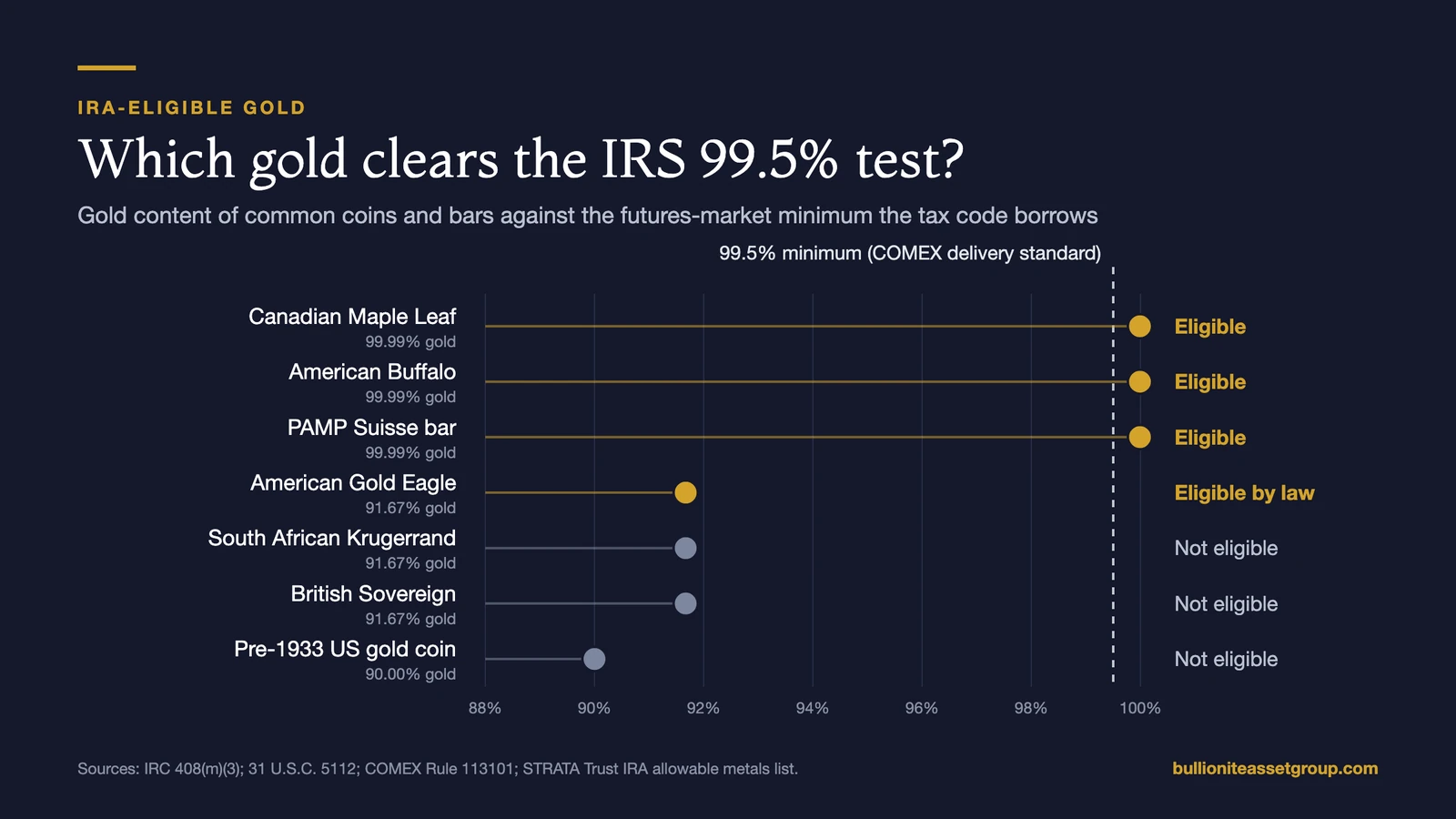
The American Gold Eagle is the famous exception. Under 31 U.S.C. 5112, the one-ounce coin weighs 33.931 grams and contains one troy ounce of fine gold, which makes it 22-karat, or 91.67% gold. It fails the 99.5% test but qualifies anyway, because the law names it.
The South African Krugerrand is also 22-karat, but no law names it, so it has no route in. That's the whole difference between two coins with the same gold content.
Are IRA-approved gold bars different from coins?
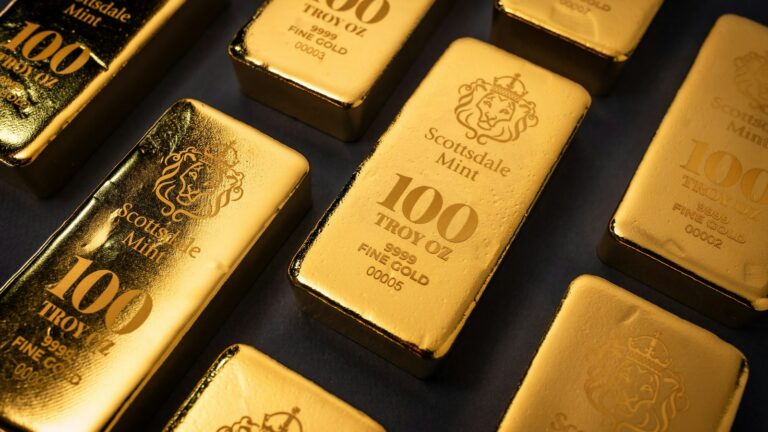
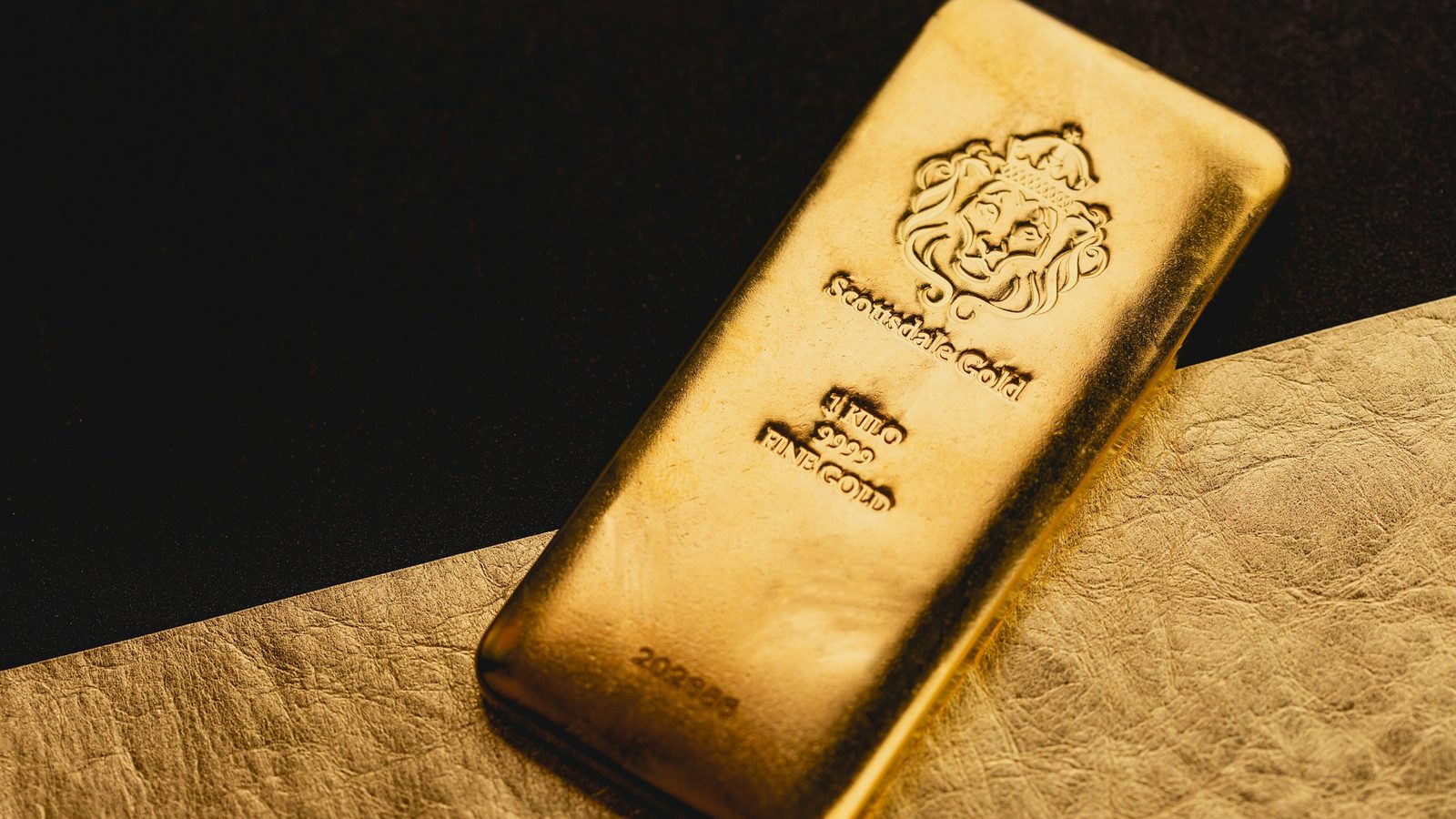
IRA-approved gold bars qualify only through the fineness route, so the refiner and the paperwork matter more than they do for a government coin. IRA-eligible gold bars are at least .995 fine, made by an accredited refiner and stamped with their weight, fineness and the refiner's mark. Larger bars usually carry a serial number and an assay certificate too.
Bars come in sizes from 1 ounce up through the 1-kilogram bar (about 32.15 troy ounces) to the 100-ounce bar COMEX trades. Larger bars usually cost less over spot per ounce. They're also harder to split, which matters later: an IRA that has to take required minimum distributions or move part of its metal can hand out coins or small bars more easily than slices of a kilo bar.
Coins are the simpler route for most IRAs. A Canadian Maple Leaf, Austrian Philharmonic or American Buffalo is .9999 fine and qualifies on fineness; an American Gold Eagle qualifies by name. Our list of IRA-approved gold coins covers each coin, including the proof versions custodians accept.
What gold isn't IRA-eligible?
Anything that's below 99.5% and not named in the law, anything sold mainly as a collectible, and any gold you already own. These are the products people most often try to put in an IRA:
| Product | Why it doesn't qualify |
|---|---|
| South African Krugerrand | 22-karat (91.67%) and not named in the law |
| British Sovereign | 22-karat and not named in the law |
| Gold Britannia minted before 2013 | 22-karat; Britannias made from 2013 on are .9999 and accepted |
| Pre-1933 US gold coins | 90% gold, and usually priced as collectibles |
| Mexican 50 Peso | 90% gold |
| Rare, numismatic or "limited mintage" coins | Collectibles, whatever their gold content |
| Jewelry and scrap | Not bullion, and usually below .995 |
| Gold you already hold personally | IRA contributions must be in cash |
STRATA's list rules out the Krugerrand, the Sovereign, pre-2013 Britannias, the Mexican Peso and any rare or collectible coin by name. Check your own custodian's list, since each one sets its own.
The last row surprises people. Under section 408(a)(1), an IRA can't accept any contribution that isn't cash, apart from rollovers. You can sell your own coins and contribute the cash, up to $7,500 for 2026 ($8,600 at 50 or older), and then the IRA buys eligible gold.
What happens if your IRA buys gold that isn't eligible?
The IRS treats the purchase as if you'd taken the money out. Its page on investments in collectibles says the account owner is deemed to receive a distribution, in the year of purchase, equal to what the collectible cost. It's reported on Form 1099-R and taxed as ordinary income, and the 10% additional tax can apply if you're under 59½.
Here's what that looks like. Say a 55-year-old's IRA buys $25,000 of Krugerrands, and they're in the 24% federal bracket. That's $6,000 of income tax plus a $2,500 additional tax: $8,500 owed on coins that are still sitting in the IRA. The IRS doesn't tax the same amount again when the coins are later distributed, but that's little comfort.
The IRS adds that buying a collectible for your own use can also be a prohibited transaction. And eligible gold can still cause a distribution if it leaves the trustee's possession.
How to check that gold is IRA-eligible before you buy
- Get your custodian's list of accepted products before you talk to a dealer, and buy from it.
- Check the product itself: a fineness stamp of .995 or higher (or an American Gold Eagle), a recognized mint or accredited refiner's mark, and the weight. Bars should come with an assay certificate or serial number.
- Ask for a written quote that names the product, year, fineness, weight and premium over spot. Our breakdown of gold IRA fees shows what that premium can cost you.
- Be careful with anything sold as rare, limited or "exclusive." The CFTC's gold and silver IRA advisory warns that if someone sells you higher-priced "collectibles" for an IRA, the coins likely aren't rare and you're being scammed.
- Let the IRA buy it. Your custodian pays the dealer from the IRA, and the dealer ships straight to the depository.
- Keep the invoice and the depository's receipt, and check that your statement lists the exact product.
Our step-by-step guide to investing through a precious metals IRA covers opening and funding the account, and the 401(k) to gold IRA rollover guide covers moving workplace money.
Buy gold your IRA can keep
The test is simple once you know it: 99.5% pure from an accredited source, or an American Gold Eagle, always held by a trustee. Bullionite helps investors set up a precious metals IRA and check products against the custodian's list before any money moves. Book a consultation and bring the quote you've been given.
This guide is general information, not tax, legal or investment advice. The rules and limits cited are current for 2026, so check your own situation with a CPA or tax attorney before you act.
FAQ
Is the American Gold Eagle really IRA-eligible if it’s only 91.67% gold?
Yes. Section 408(m)(3) names the gold coins described in 31 U.S.C. 5112(a)(7) to (10), which are the four American Gold Eagle sizes, so they qualify regardless of fineness. Each still contains its full stated weight of pure gold; the rest is alloy that makes the coin harder.
Does the IRS publish a list of IRA-approved gold?
No. The IRS says there's no list of approved investments, and the tax code sets a test instead of naming products. Custodians publish their own lists of accepted coins and bars, and those lists differ, so use your custodian's.
Are silver, platinum and palladium held to the same standard?
The same rule applies with different numbers. Custodians such as STRATA require silver to be 99.9% pure and platinum and palladium 99.95%, and the American Silver Eagle and American Platinum Eagle qualify by name. Our guide to what IRA-eligible silver means covers silver in detail.
Is a gold ETF IRA-eligible?
A gold ETF is a different product: your IRA owns fund shares, not metal, and most brokerage IRAs can buy them. You give up holding specific bars and coins, and you pay the fund's expense ratio instead of storage fees. Our comparison of a gold IRA and a gold ETF covers the trade-offs.

As the Founder and Chief Investment Officer of Bullionite and Bullionite Asset Group, I’ve built my career on a simple premise understanding the intersection of macroeconomics, commodities, and digital assets to stay ahead of the curve, not under it. My focus is on navigating the complexities of the world’s largest markets spanning the US, the Middle East, and Asia to identify high-value opportunities for alternative investment.
With a specialized focus on Self-Directed IRAs (SDIRAs), I help investors move beyond traditional 401ks by integrating assets like precious metals and cryptocurrency into their retirement strategies. Based in Newport Beach, California, I am dedicated to bridging the gap between traditional finance and the evolving landscape of new age digital assets, ensuring that every strategic move is backed by deep market insight and a commitment to long-term growth.